
To begin with the implementation of KESEMPATAN Project[1] at village level, in November and December 2019, the implementing partners of the Project in East Java and West Nusa Tenggara Barat have facilitated community members to carry out social mapping activities. In East Java, social mapping was implemented in 8 villages consisting of 2 (two) villages in Probolinggo District, 2 (two) villages in Lumajang District and 4 (four) villages in Jember District. In West Nusa Tenggara, it was implemented in 4 villages consisting of 2 villages in East Lombok District and 2 villages in Central Lombok District.
One of the objectives of the social mappings carried out in East Java and West Nusa Tenggara under the KESEMPATAN Project is to identify potential beneficiaries of the services to be delivered through activity centers.
The following are profiles of potential beneficiaries in the two provinces:
PROFILE OF POTENTIAL BENEFICIARIES IN EAST JAVA PROVINCE
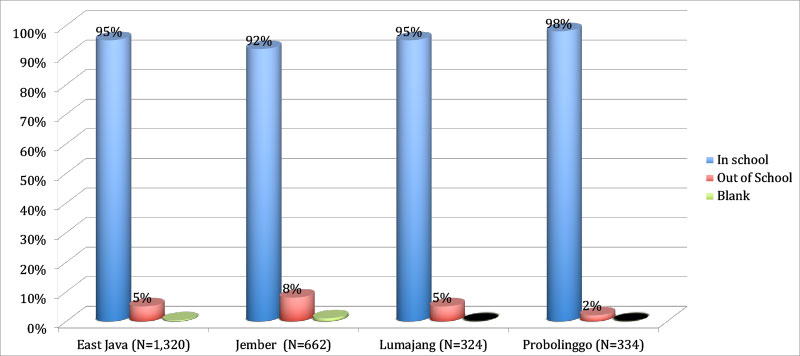
In total, 1,320 children aged 7 – 17 y.o. were identified as potential beneficiaries through family surveys in 8 villages in East Java. In all districts, percentage of children in the age group of 7 – 12 y.o. is higher, followed by those in the age group of 15 – 17 y.o. (Table 1.). Most of the children are in school (Table 2.) and some of those out of school are children with disability who do not have access to education.
Table 1. Children based on age
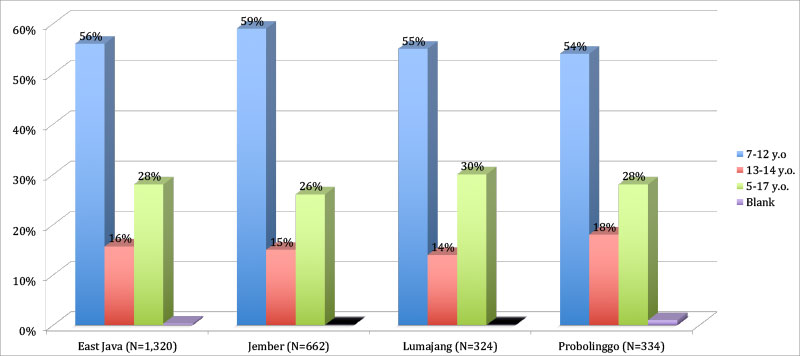
Table 2. Children based on education status
The survey found that 31% of the children in the 8 villages are involved in works (Table 3.). The survey did not assess whether these children falls under the category of child labourers which is prohibited by the laws. Most of these children work in agricultural sectors (Table 4.), especially tobacco growing as the social mappings were implemented in tobacco growing areas. Small number of children are involved in taking care of livestock. More boys than girls are involved in agricultural works but involvement of girls is significant (Table 5.). With regards to age groups, 44% of the children involved in agricultural works in the 8 villages is in the age group of 7-12 y.o. followed by 36% in 15 – 17 y.o. and 20% in the age group of 13 – 14 y.o (Table 6.).
Table 3. Children involved in works
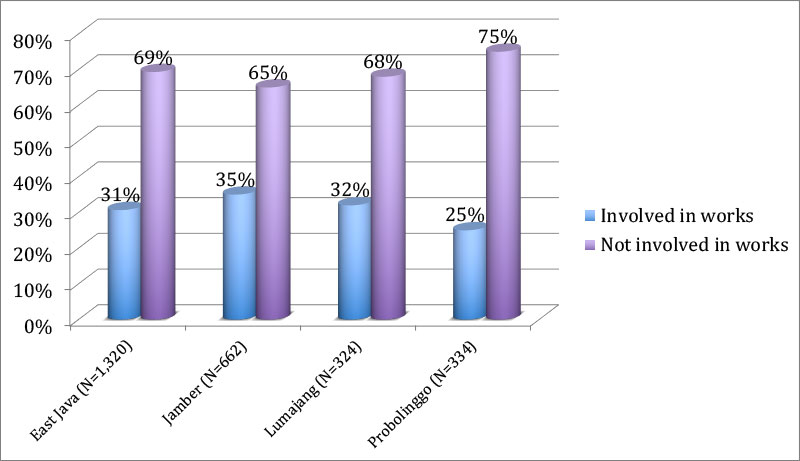
Table 4. Children involved in works based on sector
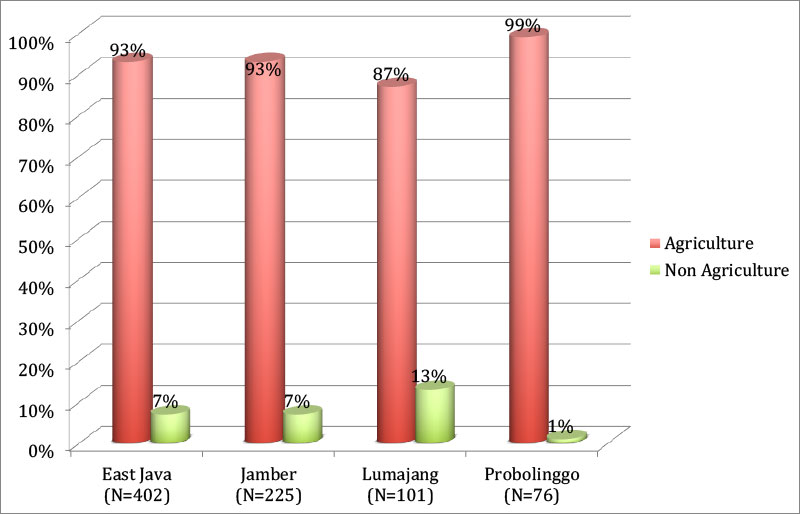
Table 5. Children involved in agriculture based on sex
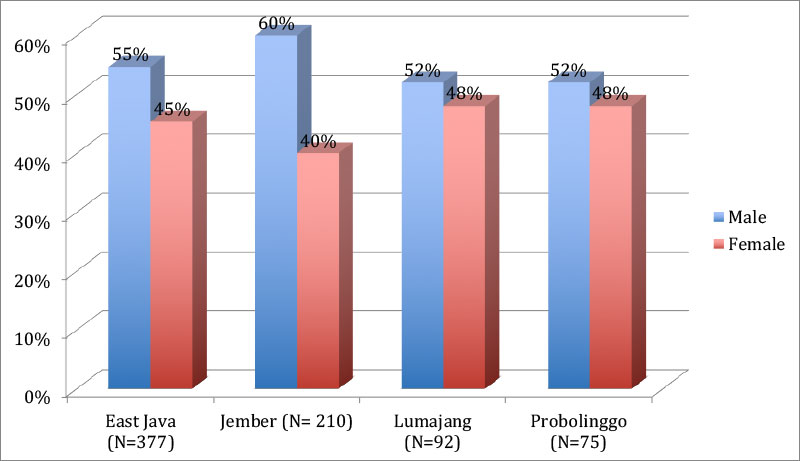
Table 6. Children involved in agricultural works based on age
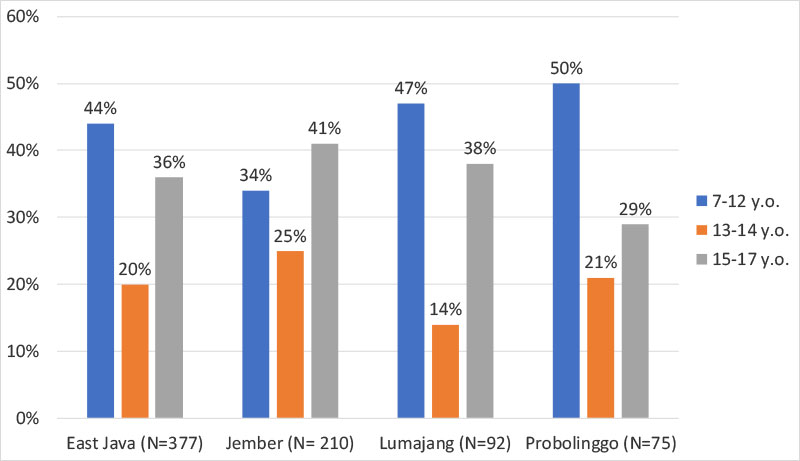
The survey reached to 1,127 families in 8 villages. The head of families work mainly as farm workers, farmers and merchant Table 7.). Education level achieved by most of family head is elementary education level (Table 8.), finished as well as not finished, indicating low education level of the labour force in village areas.
Table 7. Family heads based on education level
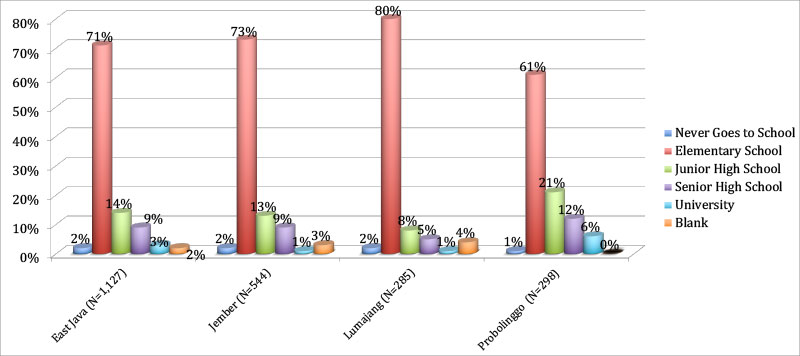
Table 8. Family heads based on jobs
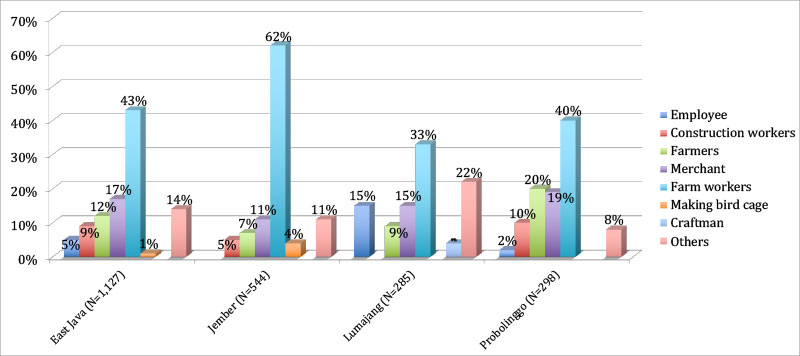
PROFILE OF POTENTIAL BENEFICIARIES IN WEST NUSA TENGGARA
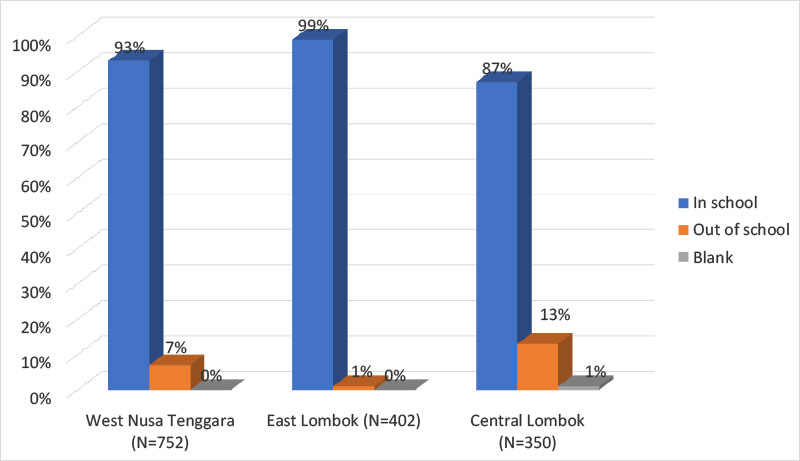
In total, 752 children aged 7 – 17 y.o. were identified as potential beneficiaries through family surveys in 4 villages in West Nusa Tenggara. In Central Lombok, more female children than male were captured by the survey (Table 9.). In all districts, percentage of children in the age group of 7 – 12 y.o. is higher, followed by those in the age group of 15 – 17 y.o. (Table 10.). Most of the children are in school (Table 11.) but a relatively high number of children in Central Lombok District is out of school.
Table 9. Children based on sex
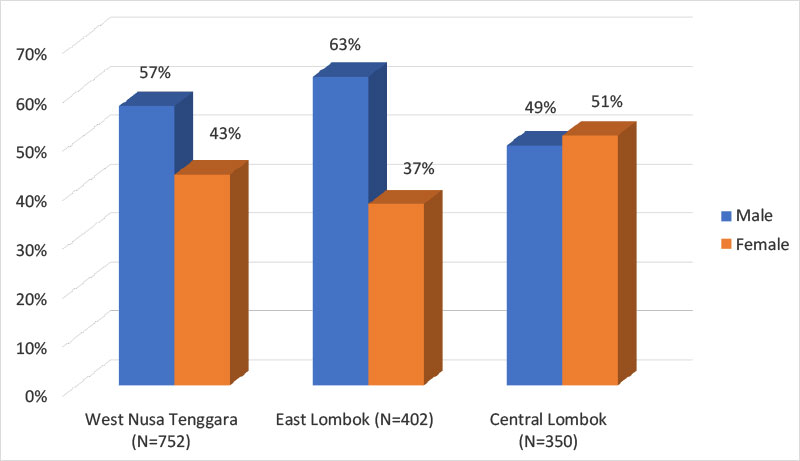
Table 10. Children based on age
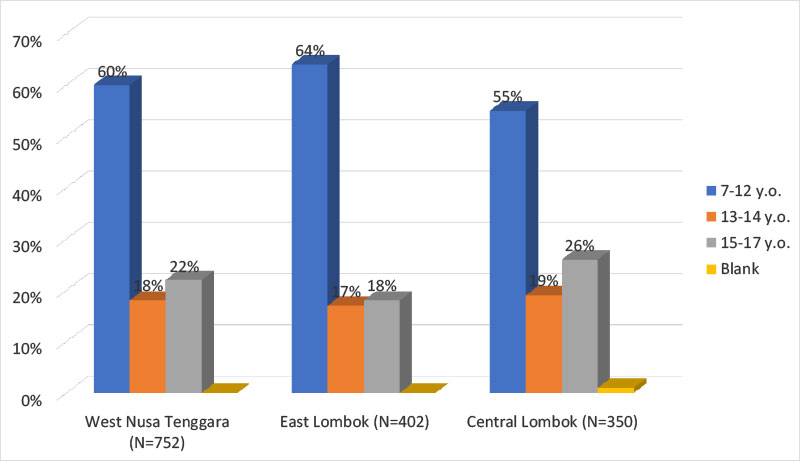
Table 11. Children based on education status
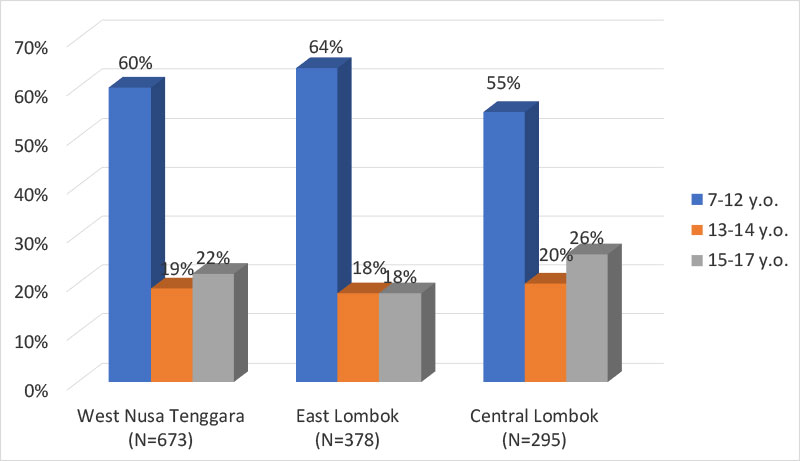
The survey found relatively very high number of children (89%) in the 4 villages that are involved in works (Table 12). This percentage is much higher than percentage of children in works in selected villages in East Java which is only 31%. The survey did not assess whether these children falls under the category of child labourers. All of these children work in agricultural sectors (Table 13.), especially tobacco growing as the social mappings were implemented in tobacco growing areas. More boys than girls are involved in agricultural works but involvement of girls is significant (Table 14). With regards to age groups, 60%of the children involved in agricultural works in the 4 villages is in the age group of 7-12 y.o. followed by 20% in 15 – 17 y.o. and 19% in the age group of 13 – 14 y.o (Table 15.).
Table 12. Children based on involvement in works
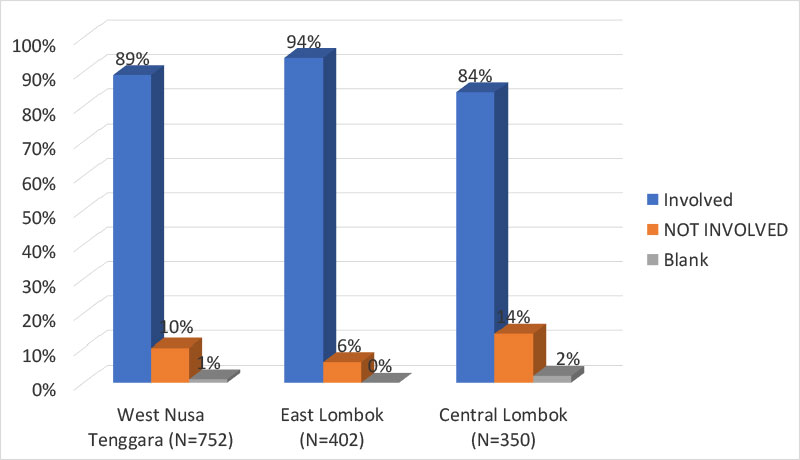
Table 13. Children involved in works based on sector
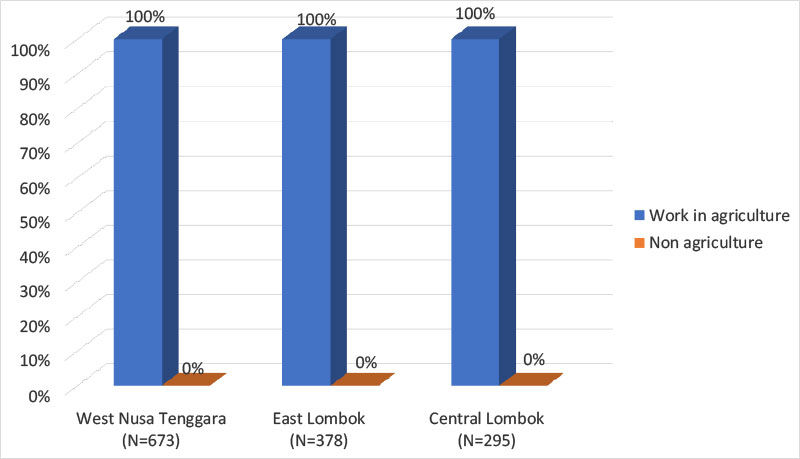
Table 14. Children involved in agricultural works based on sex
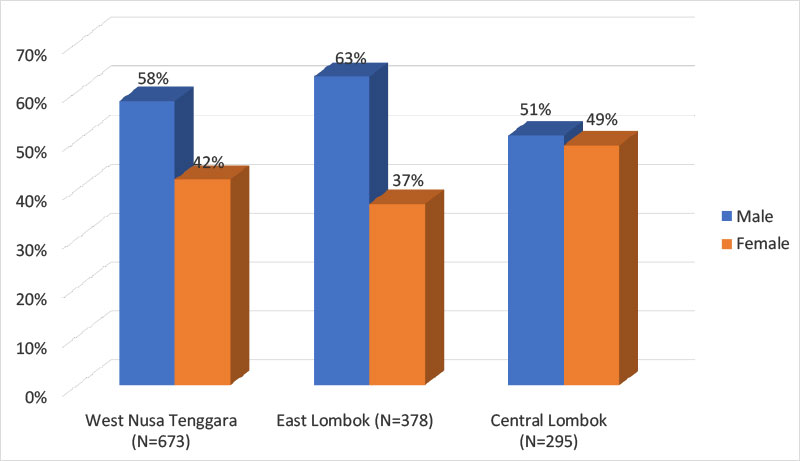
Table 15. Children involved in agricultural works based on age
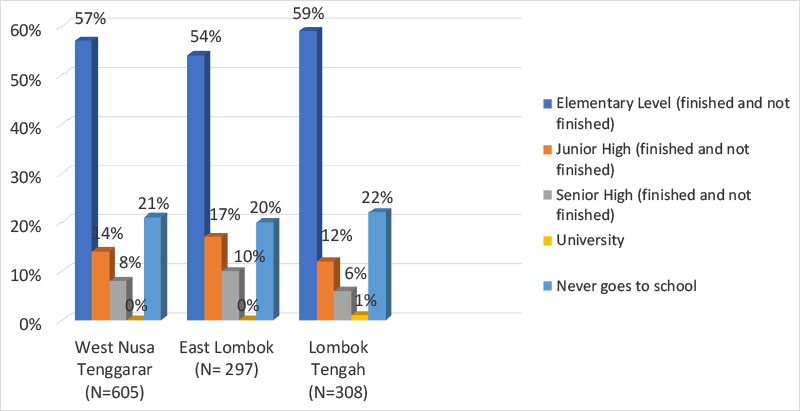
The survey reached to 605 families in 4 villages. The head of families work mainly as farm workers (39%) and farmers (51%) (Table 16.). Education level achieved by most of family heads is mainly elementary education level, finished as well not finished with relatively high percentage of those never go to school, 21% (Table 17.), indicating low education level of the labour force in village areas.
Table 16. Family heads based on jobs
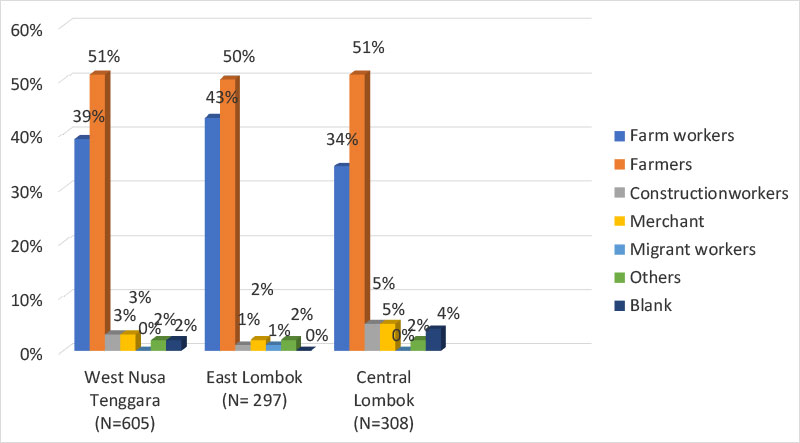
Table 17. Family heads based on education level
[1] The program aims to prevent child labor in agriculture targeting a number of villages in East Java and West Nusa Tenggara. This program is being implemented by JARAK with support from ECLT from 2019 to 2021.
Source: Summary of Social Mappings in East Java and Nusa Tenggara, Indonesia
Download PDF: Versi Bahasa Indonesia | English Version